News and articles

Why we say autism acceptance, not awareness.

All news and articles

Published

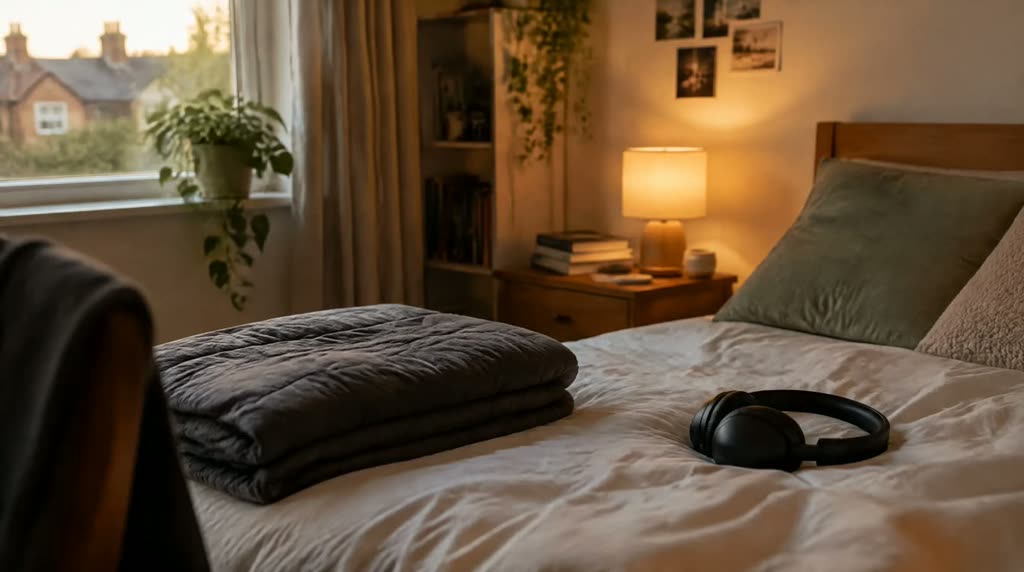
Illustrative photograph: a calm uncluttered bedroom corner with a soft lamp, a folded weighted blanket and noise-cancelling headphones.
Generated illustration.

Each April the National Autistic Society runs World Autism Acceptance Month. It used to be called awareness. The word changed because awareness asks people to notice that autistic people exist, and acceptance asks them to change something.

In a children's home that difference is concrete. Awareness is knowing a young person is autistic. Acceptance is adjusting the house: keeping a predictable routine, giving notice before something changes, accepting that a bedroom door stays shut sometimes, not treating a meltdown as a behaviour to be corrected, and not asking someone to make eye contact to prove they are listening.

It also means not treating sensory needs as preferences. Lighting, noise, the texture of food and the smell of a cleaning product are not small things if they are the reason a young person cannot settle.

We support young people with a range of needs, including autistic young people, and we are honest with placing authorities about what a particular home can and cannot offer. If a home is not the right environment for a child, saying so early is part of the job.

All news and articlesContact our team

Contact us or make a referral.

Talk to our referral team about whether one of our homes is the right fit for a young person you are placing. Our referral line is open 9am to 5pm, Monday to Friday, and we take planned placements only.

Read this in your language

Two ways to read these pages in another language.

Your browser can translate this page

This is the better option: the translation happens on your own device, so nothing you read here is sent anywhere, and it works on every page of the site.

Or open this page in Google Translate

This opens in a new tab on Google’s website. Google will be able to see which page you are reading.

More languages

These translations are made by a computer. Guidance Care has not checked them, and some words may be wrong. If anything here matters for a child’s care, please ask us - we will arrange an interpreter so nothing depends on a machine translation.

Search this site

Jump straight to the page you need.

Accessibility options

Saved on this device. The site also follows your system’s reduced-motion setting automatically.

Prefer a different size or colour altogether? Your browser’s own zoom and high-contrast settings work on every page here, and this site does not override them.